
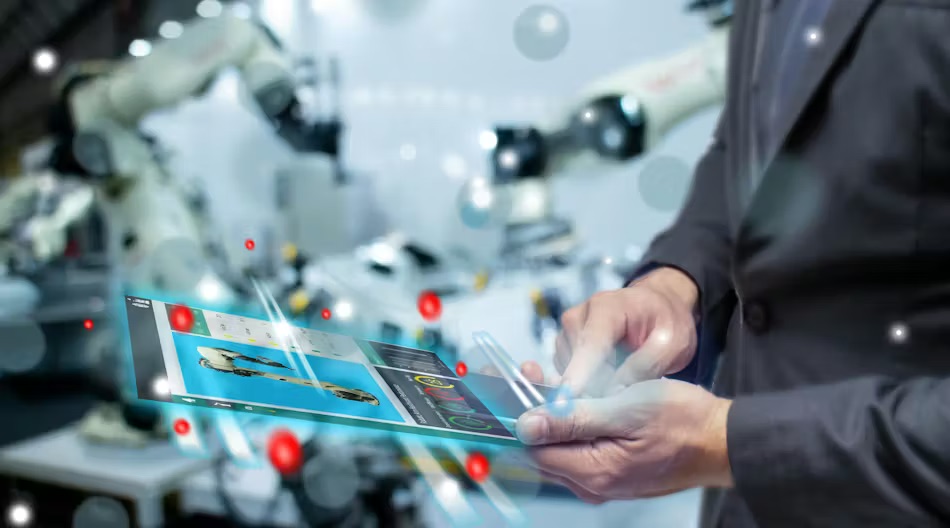
Stay ahead of the curve, AI is changing all aspects of the industrial world.
1. AI-Driven Product Development
AI is transforming the way products are designed, tested, and optimized. In 2025, we can expect:
- AI-powered design: Generative AI tools will automate ideation, rapidly prototyping multiple iterations based on functional requirements.
- Predictive analytics: Machine learning models will enhance demand forecasting, enabling businesses to align production with market needs.
- Automated testing & quality assurance: AI-driven simulations will replace traditional testing, speeding up product validation and reducing physical prototypes.
- AI-driven personalization: AI will enable hyper-personalized products based on consumer preferences, enhancing customer satisfaction.
🔹 Example: Companies like Autodesk are using AI to generate optimal product designs that reduce weight and material waste, improving efficiency in aerospace and automotive industries.
2. Agile Product Development at Scale
Agile methodologies are expanding beyond software into hardware and physical product development. Key shifts in 2025 include:
- Digital twins & virtual prototyping: Real-time simulation of physical products will enable faster iteration cycles and reduced development costs.
- Lean development & cross-functional teams: Companies will adopt Agile at scale, with smaller, faster-moving teams working on iterative improvements.
- Continuous integration & rapid feedback loops: Increased customer collaboration will drive co-development, leading to faster go-to-market cycles.
- Sustainability-focused innovation: Agile methods will allow businesses to quickly adapt to regulatory changes and eco-friendly materials.
🔹 Example: Automotive manufacturers like Tesla are using Agile methodologies to release software updates for vehicles on the fly, transforming product lifecycles.
3. Additive Manufacturing (AM) Revolution
Additive manufacturing, or 3D printing, is disrupting traditional supply chains by enabling localized, on-demand production. In 2025, we’ll see:
- Mass customization: AM will allow for tailored products, reducing inventory needs and waste.
- Advancements in materials: Stronger, more sustainable materials will expand the applications of AM beyond prototyping into full-scale production.
- Distributed manufacturing: Companies will shift from centralized production to localized printing hubs, reducing logistics costs and carbon footprints.
- Hybrid manufacturing: The integration of additive and subtractive manufacturing techniques will enhance production capabilities.
🔹 Example: Companies like Adidas are using 3D printing to create performance-optimized footwear, reducing waste and improving speed-to-market.
The Future of Product Development: Faster, Smarter, More Flexible
By embracing AI, Agile, and Additive, businesses will gain a competitive edge in 2025. These technologies will drive efficiency, personalization, and sustainability, allowing companies to innovate at the speed of demand.
💡 What’s Next?
- How will businesses integrate AI-powered automation into their design workflows?
- What industries will benefit most from additive manufacturing’s scalability?
- How can Agile principles be refined for complex physical product development?
Stay ahead of the curve—2025 is set to be a landmark year for product innovation! 🚀